ENVIRONMENT & HUMAN HEALTH, INC.


News and Updates

Studies and news reports that expand the scope of Environment & Human Health, Inc.'s (EHHI) research reports about health and the environment. Click here for full reports at www.ehhi.org.


12 Steps to Reducing Fetal Exposures

Indoor Tanning Industry Denies Risks, Report from the U.S. House of Representatives Warns
Tanning salons provide false and misleading information to teens, according to an investigative report prepared by the minority staff of the Committee on Energy and Commerce. Salons target teenage girls with advertising and promotions, deny known risks of indoor tanning, provide false information on benefits of tanning, and fail to follow FDA recommendations on tanning frequency. Undercover investigators found that 90% of salons downplayed the risks of indoor tanning. Nearly 80% said tanning salons would be beneficial for health. Download the press release.

Flame Retardants from Stuffed Furniture Found in Pregnant Women's Blood
Chemical and Engineering News, a trade publication, warns that a new study found blood levels of toxic flame-retardants were highest in pregnant women who used stuffed chairs, couches and other furnishings that contain high levels of chemicals called polybrominated diphenyl ethers (PBDEs). Previous studies have shown that Americans have 20 times higher blood levels of PBDEs than Europeans. Flame-retardant chemicals have been linked to disruptions in thyroid levels during pregnancy, as well as to neurological problems in children exposed to PDBEs prenatally.

Study Finds Environmental Factors Are as Important as Genes in Autism
The New York Times reports that a new study of twins suggests that environmental influences, including those that occur during pregnancy, may be as important as genetic factors in causing autism. Shared environmental factors accounted for 58 percent of autism spectrum disorders in the cases studied. Only 38 percent of the cases could be attributed to genetic factors, far lower than the 90 percent suggested by previous studies. Research is underway to investigate how environmental exposures early in pregnancy may be linked to autism, says the National Institutes of Health.

Insecticides Linked to Birth Defects in Boys
According to the British Medical Journal (BMJ), research suggests that exposures to insecticides and insect repellents during pregnancy may be linked to birth defects in baby boys. Consumer Reports describes a study published in the British Medical Journal warning that insect repellents and insecticides may increase the risk of hypospadias, a birth defect that causes the opening of the penis to occur the underside (rather than the tip), necessitating surgery to correct the problem.

Fumes from Water-Based Paints Raise Risk of Childhood Asthma and Allergies
Scientists at Harvard University and Sweden's Kalstad University found that infants and children who sleep in bedrooms with fumes from water-based paints and solvents are two to four times more likely to suffer allergies and asthma, according to Environmental Health News. As a precaution, pregnant women may want to reduce their exposures to water-based paints, as well as common household chemicals and oil-based products such as turpentine, liquid paint removers, and other solvents.

Insect repellents linked to genital defects in baby boys

The Dangers to Health from Outdoor Wood Furnaces

Study Shows Smoke from Wood-Burning Heaters Damages DNA
Environmental Health News cites a new study showing that airborne particles in wood smoke can trigger gene changes and DNA damage .Researchers at University of Copenhagen, Denmark, report that wood smoke particulates generate reactive oxidants known to injure cells and damage DNA. They say wood smoke particulates can cause potentially cancerous cellular changes to DNA and activate genes linked to inflammation and oxidative stress. Click here for pdf.

Connecticut Attorney General, health advocates call for ban on outdoor furnaces
Former Attorney General Richard Blumenthal issued a press release asking Connecticut's General Assembly to ban utdoor wood-burning furnaces, which continuously emit toxic smoke that sickens neighbors and pollutes neighborhoods. The American Lung Association and Environment and Human Health, Inc. (EHHI), a nonprofit health advocacy group, joined Blumenthal in urging the legislature to impose a statewide prohibition on the furnaces. Click here for EHHI's press release.

EHHI's OpEd on the harmful health effects of wood smoke
The New Haven Register published Environment and Human Health, Inc.'s OpEd stating that homeowners have the right to be free of noxious wood smoke in their homes. Read the American Lung Association's position paper calling for a ban on outdoor furnaces. Environment and Human Health, Inc. has asked the Connecticut Legislature to help the many people in the state who are being made sick from breathing their neighbor's wood smoke on a continuous basis. Read more about wood smoke here.

Wood smoke can be a nuisance, says Connecticut Department of Public Health
The Connecticut Department of Public Health has declared that wood smoke—under certain circumstances—can be considered a public nuisance. This constitutes major progress on an issue that has become a problem for many people in Connecticut, as well as across the country.

For further information about woodsmoke, download EHHI's report or click here for additional news articles.

12 Steps to Reducing Carcinogenic Exposures

University of Minnesota study links indoor tanning to melanoma
Frequent use of tanning beds can triple someone's risk of developing the deadliest form of skin cancer—no matter how old they are when they start—according to a study published in May 2010 by researchers at the University of Minnesota. Click here for news story.

Tanning beds as deadly as cigarettes

The International Agency for Research on Cancer (IARC) recently ranked ultraviolet-emitting tanning beds among the highest cancer risks, along with cigarettes, arsenic and asbestos. EHHI's pamphlet, 12 Steps to Reducing Carcinogenic Exposures, outlines ways to avoid cancer-causing threats to human health. Tanning beds used for cosmetic reasons are now classified as "carcinogenic to humans." Click here for news story.

Study links formaldehyde to more common cancers
Formaldehyde has long been linked to rare tumors of the nasopharynx, which includes the back of the throat, but new research links the chemical compound to cancers of the blood and lymphatic system. Click here for story.

For further information about cancer risks, download EHHI's brochure.

Artificial Turf: Exposures to Ground Up Rubber Tires on Athletic Fields and Playgrounds

EHHI's Op-Ed in response to ground-up used rubber tires in toddler playgrounds
Environment and Human Health Inc. (EHHI) remains remains extremely concerned about the ground-up rubber tire mulch that is being placed in our youngest children's environment––their playscapes. Some government scientists worry about the safety of using recycled tires for playgrounds. Click here for OpEd.

EHHI's Op-Ed in response to schools and towns installing artificial turf fields containing ground-up rubber tire in-fill
Environment and Human Health Inc. (EHHI) is concerned about synthetic turf fields that are being installed by schools and towns all over the United States. Many newspaper articles are reporting an increase of MRSA infections among football players playing on synthetic turf fields. According to a company website, "installation of a FieldTurf field eliminates the use of harmful pesticides, fertilizers and herbicides, while at the same time, removes over 40,000 tires from landfill sites." Because small crumbs of rubber tire are loosely spread over dyed green grass-like blades, they can be easily picked up by shoes, socks and even ears and hair. Click here for health risks.

For further information about artificial turf, download EHHI's report or click here for additional news articles.

Plastics That May Be Harmful to Children and Reproductive Health

Yale study explains how Bisphenol A (BPA) chemically modifies DNA
EHHI Board member Hugh S. Taylor, MD, director of the reproductive endocrinology and infertility section of the Yale School of Medicine, says plastics containing BPA cause permanent changes that can lead to cancer in mice. While the data on BPA in humans is less clear than with DES, adult animal models are clearly showing that in utero exposure to BPA can increase the risk of breast cancer. Click here for news story.

FDA relied on chemical industry lobbyists to discredit scientific studies
warning of BPA risks

Emails obtained by the Wisconsin Journal Sentinel show FDA asked chemical industry to study BPA.

Chicago becomes first municipality to ban BPA in baby bottles and cups
Chicago's ban on the sale of baby bottles and cups containing BPA will take effect in January 2010. Click here for story.

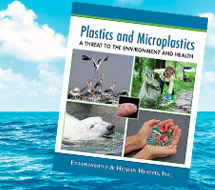
For further information about plastics, download EHHI's report or click here for additional news articles.

Risks from Lawn-Care Pesticides

Rats are fat after long-term exposure to lower levels of atrazine
Much of the water in the Midwest is contaminated with the agricultural pesticide atrazine. A new study in Environmental Health News suggests a mechanism to explain prior studies that found high prevalence of obesity in areas of the United States with heavy atrazine use. This study also shows that high-dose experiments do not predict low-dose results, which calls into question many federal safety standards presumed to protect human health. Click here for news story.

EPA announces plan to require disclosure of secret pesticide ingredients
Reversing its policy of the last decade, the U.S. Environmental Protection Agency will now require pesticide manufacturers to publicly disclose inert ingredients in pesticide products. Nearly 4,000 inerts—including several hundred that are considered hazardous under other federal rulea—are used in agricultural and residential pesticides. Although some secret ingredients are toxic, manufacturers have not been required to identify them on pesticide labels. Click here for news story.

A Survey of Asthma Prevalence in Elementary School Children

San Joaquin Valley study shows bad air days raise children's ER visit rate
Children's asthma-related emergency room visits have been shown to rise with levels of fine particulates in the air — even on days where air quality is considered in the moderate range. The connection between asthma hospital visits and particulate pollution should give regulators pause — especially those who deal with diesel exhaust and wood smoke emissions — because both contain enormously high levels of particulate matter. Click here for story.

For further information about asthma in childhood, download EHHI's report or click here for additional news articles.

News items are not independently verified by EHHI and inclusion on this site does not constitute an endorsement.


Read more.
click here>


Read more.
click here>


Read more.

click here>


Read more.

click here>


Read the full report.
click here >


Read the full report.
click here >


Read the full report.
click here >


Read the full report.
click here >